

If modular is moving this fast, what did traditional construction miss along the way?
Something quiet is happening in housing. Not a revolution with press releases and ribbon cuttings. Just a steady, structural shift, the kind that only becomes obvious once it’s already well underway.
Modular construction is outpacing traditional building on sustainability, especially as approaches tied to Sustainable Housing take shape. Not in theory. In practice, in factories, in measurable outcomes. If the results are already there, what’s still holding traditional construction back?
The Job Site Is a Wasteful Place
Rain comes. Wood sits. A pallet of insulation gets soaked on a Tuesday and ends up in a skip by Friday.
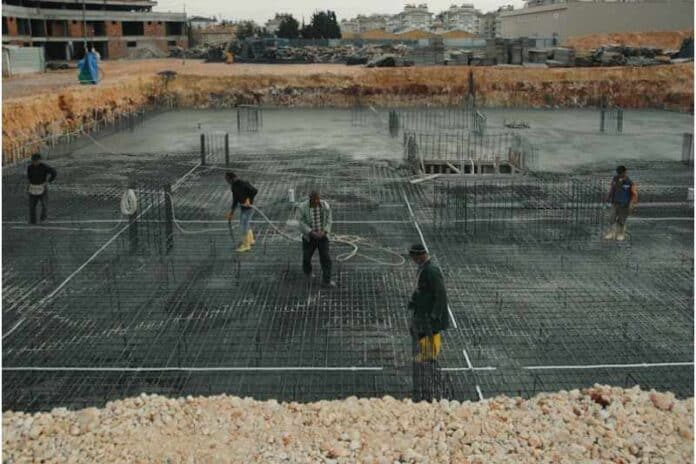
Traditional construction is outdoor work by definition, and outdoor work is exposed work. Materials arrive before they’re needed. They get damaged, miscounted, or left over. The dumpster at the end of a conventional build tells the real story: a graveyard of offcuts, broken boards, and packaging that nobody accounted for.
Factories don’t work like that.
Modular production happens inside, under controlled conditions, with precise material lists and reusable offcuts. Waste doesn’t disappear, but it shrinks significantly. Some estimates put construction waste reduction at up to 90% compared to site-built methods. That figure sounds exaggerated until you’ve actually stood next to a traditional job site skip.
Repeatability Is a Superpower
A factory does something a field crew genuinely cannot: it repeats itself exactly.
Same wall thickness. Same insulation depth. Same tolerances, same inspection, same result, module after module after module. There’s no variation creeping in because the afternoon crew rushed, or because the delivery arrived late and someone improvised.
This matters more than people realize for energy efficiency. A well-designed home that gets built sloppily performs like a mediocre home. Gaps in the thermal envelope, inconsistent sealing, rushed details, they accumulate silently and show up in heating bills years later.
Modular homes built to a high-performance spec actually hit that spec. Consistently. That’s rarer in construction than it should be.
Time on Site Is a Sustainability Metric
Nobody frames it this way. They should.
Every additional week a construction crew operates on a plot of land generates real environmental costs:
- Diesel machinery running daily
- Delivery trucks arriving in fragments, trip after trip
- Soil compaction, drainage disruption, vegetation disturbance
- The cumulative commute of a rotating cast of subcontractors
Modular compresses that window. The structure arrives largely assembled. Site work takes weeks instead of seasons. The footprint, not just carbon, but physical, temporal, and ecological, contracts accordingly.
Faster isn’t just cheaper. In this context, faster is cleaner.
Embodied Carbon? The Number the Industry Ignores
Ask most home buyers about embodied carbon, and you’ll get a blank look.
It’s the emissions locked into materials before a building ever gets used, steel production, insulation manufacturing, and glass shipped across a continent. In some building types, it exceeds thirty years of operational emissions.
Modular manufacturers tackle this more systematically. They order at volume, standardize around lower-carbon materials, and build supplier relationships that a one-off site build simply cannot replicate. Some are already shipping modules with mass timber frames, recycled-content sheathing, and factory-integrated solar. Not as upgrades. As defaults.
Why Conventional Construction Can’t Close the Gap
Traditional builders aren’t indifferent. Many genuinely want to build responsibly.
But the structure works against them. A conventional project scatters decision-making across:
- Architects designing in one office
- Engineers reviewing in another
- Subcontractors arriving and leaving on their own schedules
- Suppliers operating outside anyone’s direct control
Getting every participant to optimize for sustainability simultaneously, across months of shifting site conditions, rarely lands perfectly. Something always slips.
Modular collapses that complexity. Design, engineering, and manufacturing share a building. Decisions compound rather than fragment. Sustainability stops being a goal someone pursues and becomes something the process simply produces.
The Direction Is Already Set
Modular isn’t emerging anymore. It has emerged. The homes coming out of factories today are tighter, leaner, and considerably lighter on the planet than what gets assembled on most conventional sites, however good the intentions behind them. You can see it reflected in the work of builders like Supreme Modular Homes, where efficiency is built into the process rather than added later. That’s not opinion. It’s the arithmetic of how each method actually works.